
- What's at stake: Carriers and advisors face stalled cases and high operating costs from fragmented legacy systems.
- Expert quote: "AI is going to take the manual layer out of this industry. Too much of life and annuities still runs on paper." — George Esposito, CEO, Zinnia
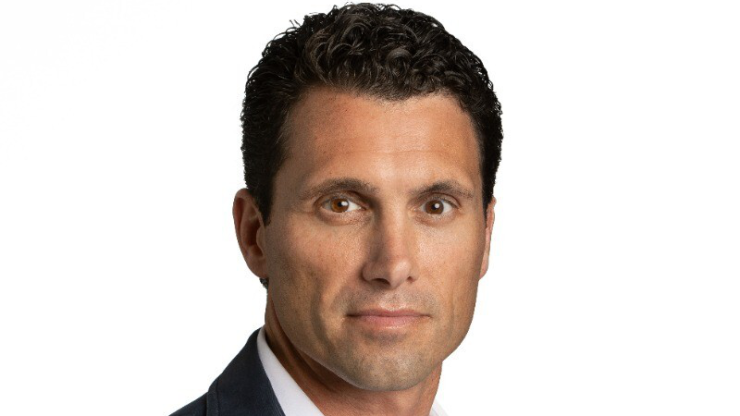
The future of life insurance technology is in simplifying workflows and connecting the aspects of the insurance process that are already digitized, according to George Esposito, CEO of life and annuities insurtech Zinnia.
"Most of the industry has digitized individual pieces of the insurance journey," Esposito said. "The next six months belong to whoever connects those pieces into one system instead of layering more point solutions on top of fragmented workflows."
Our new Meet the Insurtech Leader series gives you a look into the minds of the executives guiding these tech-forward companies.
How did you come into your leadership position?
I've worked on nearly every side of this industry. I came up as a corporate lawyer at Milbank, moved inside the industry as deputy general counsel at Nassau Financial Group, and led the build of a direct-to-consumer life insurer as president and COO of Everly Life. I joined Zinnia in 2021 and served as general counsel, chief administrative officer and head of insurance platforms. I led our acquisitions of Policygenius and Ebix's life and annuity business and owned the integrations. I became CEO in November 2025.
Each seat taught me something. At Milbank, the associates who stood out weren't the ones who worked the most hours. They were the ones who could see past the black-and-white of a deal to what the client actually needed. That's a lesson I still carry. At Nassau, one of my first projects was mapping the core systems running a 100-year-old insurance company. That's when it hit me. Property and casualty had already modernized. Life and annuities was decades behind, one of the last frontiers in financial services. At Everly, I ran product, distribution and servicing for a carrier we built end to end. That combination, seeing the gap from counsel's side and then living with it as an operator, is what brought me to Zinnia.
Today, Zinnia runs the systems of record that connect carriers, distributors and advisors across life and annuities. Our clients range from large, established carriers and distributors to companies just breaking into the market, and all of them rely on our market-leading, differentiated technology.
What advice would you give to other insurtech leaders, or to yourself five years ago?
Make the call sooner. Lawyers are trained to see every risk before they move. Running a business taught me that waiting is a risk too. Stay curious and keep challenging your own assumptions, because this technology is moving too fast for anyone to assume they know where it's headed. Just don't let the questions stall the decision.
The other piece is scaling: it's a people problem before it's a technology problem. My job is to give the people at Zinnia clear direction, real ownership and the truth, even when it's hard to hear. We start from trust. We ask people to be bold and to team up across lines, and everyone has a voice, whatever their title or background. The pace is fast and the bar is high, because our clients count on us to deliver. The people doing the best work of their careers here want it exactly that way.
How do you see AI changing insurance over the next five years?
AI is going to take the manual layer out of this industry. Too much of life and annuities still runs on paper. We see millions of pieces of it a year in our business alone. We're building agentic tools that read that paper, digitize it and link it straight to the right policy, which used to be manual data entry.
Paper is where friction lives. Every piece of paper is a handoff, and every handoff is a place where a case stalls or comes back not in good order. Take out the paper and you take out the friction: faster answers for advisors, fewer errors for carriers and a better experience for the customer at the end of it. Our people get to spend their time on the work that actually needs a specialist. By 2030, the buying experience for an annuity should be as simple as opening a CD. That's not a moonshot. We're building it now.
What is the biggest opportunity for insurtechs over the next six months?
Connecting what's already been digitized. Most of the industry has digitized individual pieces of the insurance journey. The next six months belong to whoever connects those pieces into one system instead of layering more point solutions on top of fragmented workflows.
Distribution is the clearest example. Across the industry, advisors still quote in one system, run illustrations in another, and submit the application somewhere else entirely. We recently announced a connected distribution experience in Zinnia Market Connect that brings quoting, illustrations, order entry and case management into one system. Advisors and distributors can plug into it however they've built their own front end.
Stop asking what else to digitize. Start asking what you can connect.
What is the biggest mistake insurtechs make these days?
Shipping an AI demo and calling it a strategy.
AI on its own is a commodity. Everyone has access to the same models, so a flashy pilot doesn't set anyone apart. The mistake is skipping the unglamorous work underneath it: proprietary data, a real system of record and governance you can audit.
Without that foundation, AI stays stuck in pilots. It looks great in a demo and never makes it to production, because in insurance, "probably right" isn't good enough. Capability has to be trusted and auditable, or it doesn't matter how smart the model is.
The winners over the next few years won't have the best model. They'll have the best foundation under it, so their AI is something clients rely on every day, not something they watch in a demo.
What is your primary line of business?
Technology and services for life insurance and annuities.
What is Zinnia's origin story?
Zinnia started in 2005 as a third-party administrator, handling service and technology for carriers. We became Zinnia to mark a real shift in the business model, from service provider to technology platform for the whole life and annuity ecosystem.
We've grown by building and buying. We acquired Convergent Financial Technologies in 2020, Breathe Life in 2022, LPS and Policygenius in 2023 and Ebix's life and annuity business in 2024. Each one added a piece of the puzzle: fund management, digital distribution, our calculations engine, a consumer front door and distribution rails. Today that adds up to one end-to-end platform spanning product, distribution, administration and servicing for life and annuities.
What pain points is the technology trying to solve?
Life and annuities is one of the largest segments of financial services and one of the least connected. Core workflows across product, distribution, administration and servicing are still fragmented, manual and expensive. Legacy systems slow speed to market, drive up operating costs and cap growth. For decades, carriers have designed products around what their admin systems could support instead of what customers need.
Zinnia replaces that fragmentation with connected infrastructure. Carriers launch products faster. Distributors work in one environment instead of a patchwork of tools. Policyholders get a policy that just works, without ever needing to know our name.
What funding rounds has the company had?
Zinnia is an Eldridge business, also backed by funds managed by KKR and Vista Credit Partners.
What's ahead?
Self-serve, on every side of the business.
For most carriers, getting a new product to market still means a project, an engineering team and a build cycle. The distance from launch to a customer's hands is measured in quarters, sometimes years. It should be weeks. That's what Zinnia Launch and Zahara are built for: a new product becomes configuration a carrier does itself, on its own timeline.
On the distribution side, we're continuing to roll out Zinnia Market Connect two ways: a standard set of enterprise APIs for distributors who want full control, and a white-label, end-to-end platform for those who want a faster path.
Underneath all of it, we'll keep putting agentic AI to work across our operations, so our teams spend less time rekeying data and more time serving clients.
How many employees does your company have?
2,600
Where is the company based?
Greenwich, Conn.
Introductory bullet points created by AI with editorial review.

